الخطوط الملاحية الأفريقية ASLINE - AFRICAN SHIPPING LINE - The World's Gateway to Africa...بوابة العالم إلى الموانئ الأفريقية ...Dünyanın Afrika Limanlarına Açılan Kapısı...世界通往非洲港口的门户......WEEKLY VOYAGES CONNECTING CHINA, MALAYSIA, THAILAND, INDIA, SRILANKA, PAKISTAN, DUBAI TO THE FOLLOWING AFRICAN PORTS : #MOMBASA #DARESALAAM #MOGADISHU #KISMAYO #BOSASO #BERBERA #DJIBOUTI #PORTSUDAN #NACALA #DURBAN #LUANDA #LOBITO #DOUALA #APAPA #TINCAN #LOME #TEMA #ABIDJAN #BISSAU #DAKAR

ASLINE - AFRICAN SHIPPING LINE DUBAI

Monday

A NEW SHIPPING LINE CONNECTING MOMBASA TO INDIAN PORTS

AKKON LINE LAUNCHES NEW LINE CONNECTING MOMBASA TO INDIAN PORTS

The Port of Mombasa marked a milestone on Sunday, after the launch of new trade route connecting East Africa directly to India.


The route, operated by the Akkon Line under its East Africa Service (EAS), aims to strengthen cargo movement and economic ties between the two regions.


Kenya Ports Authority announced the milestone in a statement, confirming that the inaugural Voyage was handed the traditional certificate of first call, presented by Captain William Rutto in a ceremony that recognised the vessel's first official visit to the port.


Speaking during the landmark event, Captain Ruto emphasised the port of Mombasa's commitment to providing top-tier services to shipping partners while boosting bilateral relations at the same time.


“Mombasa Port remains committed to providing world-class services to our shipping partners and enhancing Kenya’s position as a key maritime hub," Ruto said.


"Every new service strengthens regional trade and reflects our strategic vision for East Africa’s shipping sector."


Effective immediately, the East Africa Service will operate on a bi-weekly schedule, linking major South Asian ports including Nhava Sheva, Mundra, and Karachi with East African ports in Mombasa and Dar es Salaam.


About the Akkon Line : 

Founded in 2018, Akkon Line is a growing Turkish shipping company focused on emerging trade corridors and is largely considered one of Turkey's largest container shipping operators.


With its entry into the East African market, the Mombasa Port's importance as a hub for regional trade and international shipping has been further solidified, linking East Africa more efficiently to key markets in South Asia and beyond.


The launch of the EAS service will also reinforce Mombasa’s role as a regional logistics hub for East and Central Africa, increasing trade volumes and strengthening the port’s position in global shipping networks.


Both Akkon Line and its local partner, Rais Shipping Services, expressed gratitude to KPA for its continued support, noting that smooth port operations and efficient customs processes are crucial for sustaining international shipping services.


The introduction of the East Africa Service is also expected to boost regional trade competitiveness, helping Kenya and its neighbours access South Asian markets more directly while facilitating faster import of critical goods.

Saturday

ISRAEL BOUND SHIPS ATTACKED BECAUSE OF GAZA : RED SEA CRISIS

The insurance cost of shipping goods through the Red Sea has more than doubled in recent days after Yemen's Houthis attacked and sank two ships, killing at least four seafarers after months of calm, industry sources said on Thursday.
The Red Sea is a critical waterway for oil and commodities but traffic has dropped sharply since Houthi attacks off Yemen's coast began in November 2023 in what the Iran-aligned group said was in solidarity with Palestinians in the Gaza war.

War risk premiums have risen to around 0.7% of the value of a ship, from around 0.3% last week before the latest attacks took place, sources familiar with the matter said, with some underwriters pausing cover for some voyages.
Rates for a typical seven-day voyage period, which are set by individual underwriters, have been quoted this week at up to 1%, matching the peak level in 2024 when there were daily attacks. This adds hundreds of thousands of dollars in further costs for every shipment.

Insurance industry sources said underwriters would try to avoid covering any vessel with links with Israel, even if it was indirect.
"What we have seen in the last week appears to be ... a return to mid-2024 targeting criteria, which essentially involves any vessel with even a remote Israeli connection," said Munro Anderson, head of operations at marine war risk insurance specialist Vessel Protect. "With ambiguity comes risk."


Monday

SOUTHERN AFRICA TRANSIT PILES UP COSTS


The transport route around the southern tip of Africa was once little used — but freighters are now forced to take it and are charging higher rates.

To get from Asia to Europe and back, global shipping companies have for decades sailed through the Red Sea and the Suez Canal. But a year ago, the Houthi insurgents in Yemen began targeting vessels in the Red Sea with drones and missiles, forcing shipping companies to divert their cargo around the Cape of Good Hope at Africa’s southern tip, a route that is some 3,500 nautical miles and 10 days longer.

Now, as this great diversion enters its second year, the costs are piling up for importers, the environment and countries like Egypt that rely heavily on maritime revenue. And the stress on shipping is likely to increase if companies rush to bring in imports 

But the diversion around Africa has increased the need for vessels — more were deployed to maintain regular service over the longer route — and rates have surged. The cost of shipping a container from Asia to Northern Europe is up 270 percent in 12 months, according to Freightos, a digital marketplace for shipping.

The demand for ships has pushed up rates everywhere. The cost of shipping a container from China to a West Coast port in the United States is up 217 percent over 12 months.

Some importers have been hit with much larger increases.


Thursday

FESCO STARTS CONNECTING MOMBASA, KENYA


  • A Russian transport company launches sea route to Kenya. 
  • FESCO has started shipping cargo between Novorossiysk on the Black Sea and Mombasa

A Russian shipping company has launched a container route between Novorossiysk on the Black Sea and Kenya’s largest port, Mombasa. 

On Wednesday, FESCO – owned by Russian state nuclear power firm Rosatom – announced that the first consignment of Kenyan tea bound for Russia was being loaded in Mombasa. The projected transit time is 43 days.

The FESCO statement indicated that Russia will export construction materials, fertilizers, metals, polymers, wood products, as well as paper and pulp to Kenya using the new route. Imports from the East African nation will be dominated by tea, coffee, nuts, and other agricultural commodities.

Russia’s export shipments will go from Novorossiysk to India’s Mundra port, a regular stop for vessels operating on the FESCO Indian Line West route between India and Novorossiysk, before onward transportation by feeder vessels to Mombasa. Imports will make their way through the port of Jebel Ali in the United Arab Emirates, ensuring a steady flow of diversified goods between the two countries.

Wednesday

INDIA'S ADANI BUYS DUBAI'S ASTRO SHIPPING 80% STAKE FOR $185 MILLION

The biggest private port operator in India, Adani Ports and Special Economic Zone (APSEZ) stated that it will acquire an 80% stake in Dubai-based Astro Offshore, an offshore supply vessel company in a deal worth $ 185 million or 1551 crores.

The move was intended to expand its fleet, increase earnings and become one of the biggest marine operators in the world, mentioned Ashwani Gupta, CEO of APSEZ.

He also said that Astro would add 26 vessels to their present fleet comprising 142 tugs and dredgers, making it 168 ships in total and also give them access to several significant customers in the region, strengthening their presence in the Indian subcontinent, Far East Asia and the Arabian Gulf.

Gupta mentioned the company’s aim to expand globally and revitalize the maritime trade route between Southeast Asia, India, the Middle East, East Africa, and North Africa. In line with this strategy, the company is exploring opportunities in Southeast Asia.

The agreement valued Astro Shipping at 235 million dollars.

The company handles offshore construction and serves clients like Saipem, McDermott and NMDC. It also specializes in offshore structures and supports drilling, exploration, dredging and land reclamation projects.

Adani Ports has a major presence in the Middle East and Far East. In the former, the company, in collaboration with Gadot Group acquired Israel’s Port of Haifa in 2022 for 1.18 billion dollars, with Adani holding a 70% stake.

In the Far East, Adani Ports is planning to build a new port in Da Nang, Vietnam. They have got approval from the government and they also operate the Port of Colombo, Sri Lanka.

APSEZ plans to expand its operations in several segments of the maritime sector and apart from its main business of container cargo handling, it wants to diversify into liquid cargo, bulk cargo and specialized cargo handling.

It is also investing generously in developing infrastructure, like building new terminals and modernizing the old facilities.

References: Business Standard, Economic Times

Monday

CHINA - AFRICA SHIPPING & TRADE INVESTMENT

Summary:

*Global Silk Road (Chongqing) Hub Port International Supply Chain was launched last week

*The discussion featured exchanges on building an integrated platform for global commerce and logistics, all aimed at bolstering trade between China and Africa.

*It would be the major shipping and logistics link between China and its African trade partners, with Congo taking the lead in the greater Eastern Africa.


CHINA - AFRICA SHIPPING & TRADE INVESTMENT

Kenya is poised to benefit from a new plan by China to consolidate several major logistics and development companies into one for better trade dealings with Africa.

The Global Silk Road (Chongqing) Hub Port International Supply Chain Ltd was launched in Chongqing, China last week.

The discussion featured exchanges on building an integrated platform for global commerce and logistics, all aimed at bolstering trade between China and Africa.

Shanghai Greenroad Warehousing and Logistics Group Co Ltd., 

Zhejiang Holley Global Industry Development Ltd, 

Chongqing Jiangjin Hub Port Industrial Park Operation Group Ltd., and 

New Land-Sea Corridor Operation Ltd are part of the conglomerate.

It would be the major shipping and logistics link between China and its African trade partners, with Congo taking the lead in the greater Eastern Africa region.

Congo receives a significant size of its imports through the Port of Mombasa, with traders preferring the Northern Corridor owing to the good road network. Others are hauled through the Dar es Salaam Port.

The main trade route in the East Africa region is the 1,700 kilometre-long Northern Corridor that runs between Mombasa (Kenya), Uganda Rwanda, Burundi and Eastern DRC. The 1,300 kilometre-long Central Corridor serves Tanzania, Rwanda, Burundi, Uganda and Eastern D.R. Congo, with an exit and entry point at the port of Dar-es-Salaam.

The two corridors facilitate export and import activities within the EAC region with a combination of rail, road and lake transportation networks. With the latest developments, Kenya will likely have an edge over Tanzania should the envisioned extension of Standard Gauge Railway to DRC sail through. Recently, the Kenyan government said it would explore private partnerships to realise the dream.

Togo, South Sudan, Sierra Leone, and Madagascar are also set to benefit from the joint logistics approach as per the deliberations at the meeting hosted by among others , China-Africa Business Council under the leadership of Xu Qun.

“The new entity aims to integrate various stages of the global supply chain and implement a comprehensive service platform linking global commerce and logistics,” a brief from the Chongqing meeting reads.

The meeting was held alongside the New International Land-Sea Trade Corridor Economic Development Forum.

The conference, attended by envoys of the direct beneficiary African states in China, saw attendees agreeing on the need for a stable supply chain platform.

“In the context of an increasingly integrated global economy, the stability and efficiency of supply chains are crucial to national economic prosperity,” the forum resolved.

The council said the supply chain conference “not only generated fresh ideas for cooperation in the sector but also bolstered Chongqing’s and China’s influence in the global supply chain system.”

“Looking ahead, the China-Africa Business Council plans to implement President Xi Jinping’s connectivity partnership initiative, as outlined in his FOCAC Beijing Summit speech, to foster a comprehensive China-Africa interconnected network,” Qun said.

China aimed to use the forum to elucidate how African countries and China can harness the strategic advantages of the New International Land-Sea Trade Corridor. The conference focused on enhancing supply chain resilience and fostering global connectivity, the brief reads.

Themed “Build an Integrated Platform for Global Commerce and Logistics,” the event drew nearly 150 participants.

Attendees included government officials, academics, representatives from social organizations, industry leaders, and corporate delegates from regions such as Chongqing, Guizhou, Gansu, and Sichuan.

The deliberations bordered on how to explore global supply chain trends, collaboration opportunities, and the synergistic growth of logistics, trade, and industry. 

It also marked the launch of the China-Africa Business Council’s initiatives supporting the 13 provinces and two regions along China’s New International Land-Sea Trade Corridor

Friday

MAPPING RED SEA ATTACKS : A NEW PERSPECTIVE FOR SHIPPING


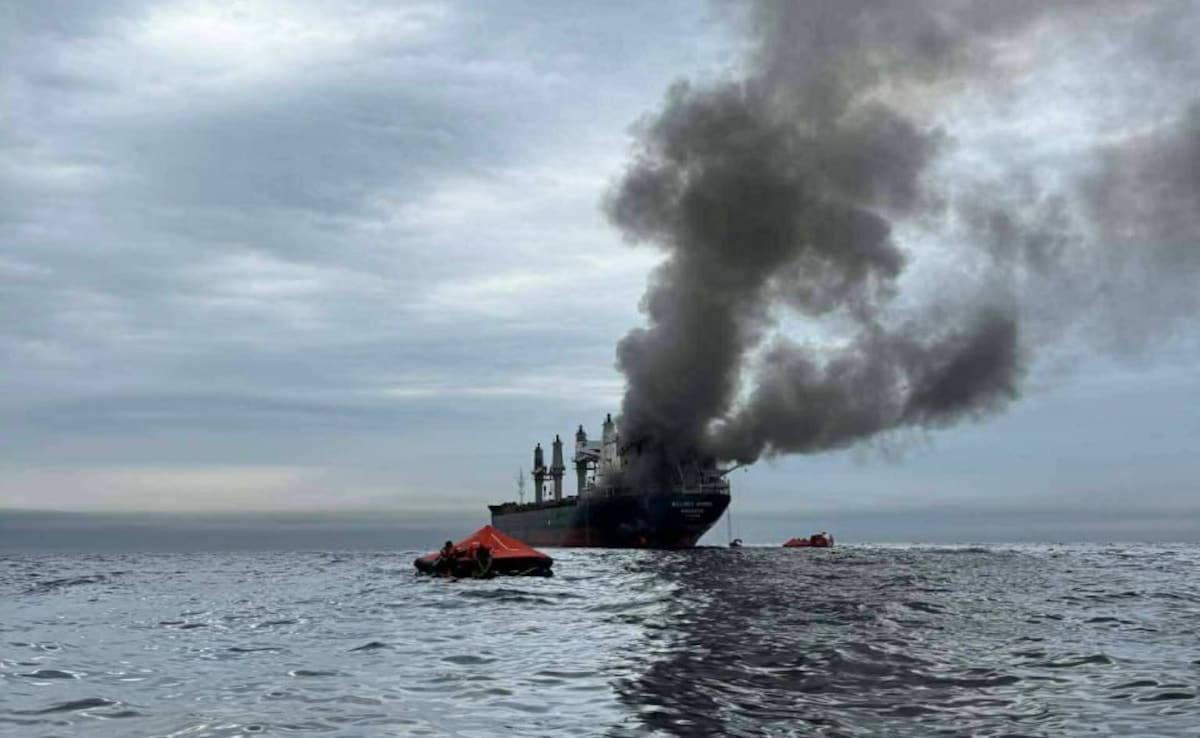
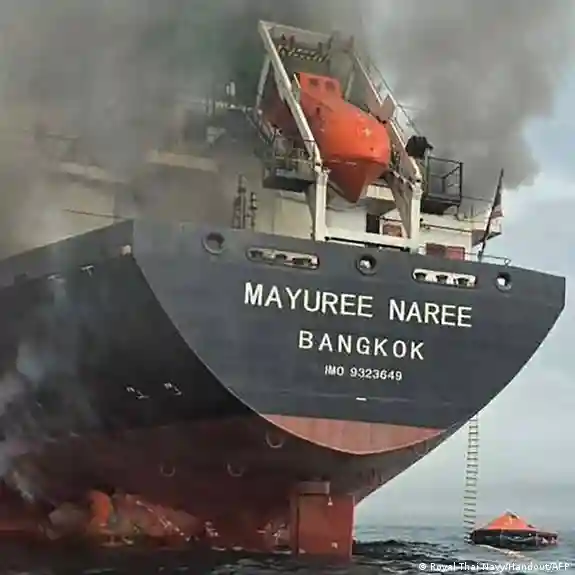
A missile attack by Yemen's Houthi rebels hit an Antigua- and Barbuda-flagged cargo ship in the Gulf of Aden, the latest assault on shipping in the region.

Within a week, atleast 3 ships either been hit or was targeted. 

The missile hit the ship's forward station late Saturday, starting a fire that those on board later put out, the private security firm Ambrey said. A second missile fired at the ship missed and people "on board small boats in the vicinity opened fire on the ship during the incident," Ambrey added, though no one was hurt onboard.

The British military's United Kingdom Maritime Trade Operations center similarly reported the attack and fire in the same area off Aden, saying "damage control is underway."

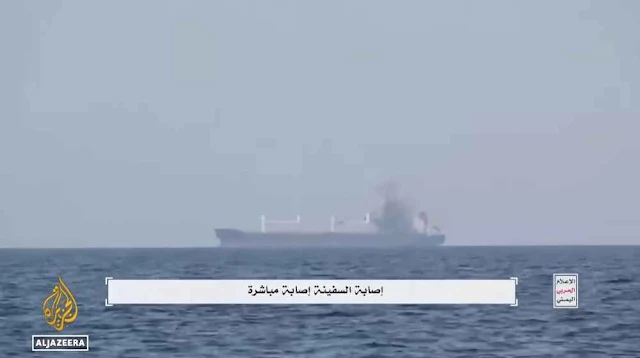
A sailor was severely wounded after a cargo ship in the Gulf of Aden was hit by two cruise missiles fired by Yemen's Houthi rebels on Thursday.

The MV Verbena, a Palauan-flagged, Ukrainian-owned, Polish-operated cargo ship reported that it had been damaged, with the crew fighting fires on board.

The vessel was en route to Italy.


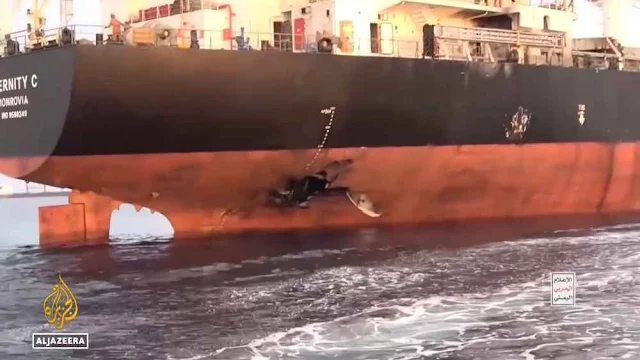
The attack on the MV Verbena comes after the Houthis crashed a bomb-laden boat into a commercial ship in the Red Sea on Wednesday.

The Houthis, who seized Yemen’s capital about a decade ago, have been attacking commercial shipping throughout the Red Sea. They say the attacks are aimed at stopping Israel's war in Gaza and supporting Palestinians, although they strike vessels that have nothing to do with the conflict.

Meanwhile, the UK Maritime Trade Operations agency reported an explosion close to a merchant vessel in the Red Sea, about 80 nautical miles north-west of Yemen's rebel-held Hodeida port, but said there was no damage or casualties.

The Houthis have launched more than 50 attacks on shipping that have killed three sailors. They have also seized one vessel and sunk another since November, according to the US Maritime Administration.


Sunday

SHIPPING COSTS TO RISE DUE TO RED SEA RE-ROUTING


The cost of international shipping has shot up as businesses prepare to ship goods for the festive season far earlier than usual, in a sign of the far-reaching effects of disruption from attacks in the Red Sea.

Kenya Ships Agents Association (KSAA) on Wednesday said importers should expect higher charges from this week as stakeholders assess the increasing insecurity from Yemen Houthis’ claim of fresh Red Sea attacks on British and American ships.

The average cost of shipping a 40ft container between the Far East and northern Europe at short notice, the figure that is most sensitive to market prices, hit $4,343 last week, roughly three times higher than the same period last year, according to freight market tracker Xeneta.

Prices have not yet surpassed the peak seen immediately after Yemen’s Houthi militant group began targeting vessels in November. But they are rebounding during a usually quiet period for shipping in the spring months.

Typically the peak period occurs between late summer and autumn, when retailers start importing goods for the November Black Friday sales and Christmas shopping season.

“The peak season has been brought forward,” said Michael Aldwell, head of sea logistics at Kuehne + Nagel, one of the large freight forwarders that handles goods and sets the price of shipping for retailers.

“Despite efforts to normalise freight rates following events such as the Covid-19 pandemic and the Russia-Ukraine War, the ongoing attacks by Houthi Rebels present a persistent challenge.”

"Major shipping lines, including those represented by KSAA, are responding by rerouting vessels around the Cape of Good Hope, a costly alternative that directly impacts the business community and consumers in East Africa,” Says KSAA Chief Executive Officer Juma Ali Tellah

The Red Sea has remained a biggest worry by shippers resulting to the rerouting of vessels to take a longest route via Southern of Africa while some vessels are attempting to mask their positions by pinging on other locations, as a safety precaution when entering the Yemen Coastline.

Tuesday

DP WORLD INKS A 30 YEAR CONCESSION AT DARESALAAM PORT


The Dubai-headquartered logistics major and global port operator, DP World, inked a 30-year concession agreement on Sunday with the Tanzania Ports Authority (TPA) to operate and modernize the multi-purpose Dar es Salaam port, as part of its strategy to extend its footprint in Africa.

Agreement details

The agreement aims to optimize the port’s operations and improve transport and logistics services across Tanzania and the region.

As part of the first phase of DP World’s multi-phase investment plan, the company will channel more than $250 million to upgrade the port. Meanwhile, the total investment during the concession period could increase to $1 billion, including potential investments in temperature-controlled storage to enhance Tanzania’s agricultural sector, as well as greater connections to rail-linked logistics.

Furthermore, DP World has unveiled plans to invest in the development of a special economic zone together with the country’s broader port sector, which will bolster Tanzania’s role in facilitating global trade.

Regional impact

The port development project will connect to the sub-Saharan Africa region through a network of roads, highways, railways, and dedicated freight corridors and ports, supporting the rising demand for logistics solutions across Africa and connecting businesses across the region to global markets.

Under the agreement, DP World will collaborate with the TPA and the port’s existing stakeholders to facilitate faster cargo clearing and improved cargo planning, further strengthening Dar es Salaam’s position as the maritime gateway for green energy metals from the copper belt in Southern-Central Africa.

Moreover, the planned developments will enhance the port’s overall operational efficiency. This, in turn, will attract more shipping lines and bigger ships to Dar es Salaam and ultimately reduce ocean freight costs for Tanzanian importers and exporters.

Currently, the company manages nearly 9% of the world’s handling capacity, positioning itself among the top five global port operators.


Saturday

UPDATE 4: RED SEA SHIPPING ROUTES : MAY 2024


The leader of the Houthi movement (Yemen) called for a further escalation of the attacks on shipping citing the potential attack on the city of Rafah and as Western pressure grows on Hamas to accept the terms of a proposed ceasefire. The statements came during their weekly demonstrations in Sanaa staged on Fridays and after a week of increased assaults targeting commercial vessels and U.S. warships.

“The Yemeni armed forces announce the beginning of the implementation of the fourth stage of escalation,” Houthi spokesperson Yahya Saree announced in a televised speech and in posting on social media. He said it was effective immediately from “the moment of this statement.”

The statement said they were targeting all ships “violating the ban on Israeli navigation,” and heading to Israeli ports in the Mediterranean. They vowed attacks in “any reachable area,” within their range, which some media outlets are interpreting as a threat against ships in the Eastern Mediterranean. That would require a range of nearly 1,200 miles Bloomberg highlights but comes days after a Houthi drone appeared to have struck the MSC Orion in a range of 300 to 400 nautical miles south of Yemen in the Indian Ocean.

The Houthi also threatened to expand their attacks to “all ships and companies that are related to supplying and entering [Israeli ports] of any nationality if a military operation is launched against Rafah” in southern Gaza. 

They said they targeted the MSC Orion container ship Monday in a drone attack in the Indian Ocean as part of their ongoing campaign against international shipping in solidarity with Gaza. Portugal-flagged MSC Orion was sailing between the ports in Sines, Portugal and Salalah, Oman and its registered owner is Zodiac Maritime, according to LSEG data. 

Zodiac is partly owned by Israeli businessman Eyal Ofer. The company did not immediately respond to a request for comment.

SHIPPING LINES AVOID RED SEA BY ALL MEANS

SUMMARY:

  • Shipping mostly settles into new normal avoiding the Red Sea.
  • The industry has largely become accustomed to longer routes though some ports are still adapting to increased volumes.

The shipping industry has settled into a new normal with routes avoiding the Red Sea according to industry experts, despite the Houthi militant group vowing to escalate attacks in the region. 

Analysis from online freight marketplace Freightos found that while the adjustments made by the industry continued to disrupt, the worst of the backlogs and shortages seen at the beginning of the Red Sea crisis have largely dissipated. 

An update from the company said issues mainly persisted in ports that were now being used more frequently than usual, as shipping operators change their routes to avoid the Red Sea, where the Houthi group have been attacking ships seen to be associating with Israel and the US has been retaliating in Yemen. 

Freightos said: “Some West Mediterranean ports are now being used as transshipment hubs for East Mediterranean-bound containers, leading to some congestion there, and terminals in Colombo, Sri Lanka are also facing some backlogs as volumes have increased there for transshipment to the Middle East.”

Friday

ETHIOPIA MULTIMODAL SECTOR

 Summary 


Winning domestic firms due to start operations in six months 

Foreign companies missing from the Government Roll out.


The list of companies awarded the first batch of multimodal logistics operator licenses in Ethiopia features a conspicuous lack of foreign entities as the government’s efforts to liberalize the sector are dogged by security concerns and worries about favoritism. 


Three separate domestic joint ventures received licenses during a ceremony at the Sheraton Addis this week, out of eight domestic bidders looking for a piece of a lucrative market that has long been under the monopoly of the state-owned Ethiopian Shipping and Logistics Services Enterprise (ESLSE). 


It is the culmination of a federal policy revision and executive directive issued by the Ethiopian Maritime Authority (EMA) in 2021, announcing plans to grant multimodal operator licenses to up to five firms including ESLSE. 


The authorities initiated a bidding process in 2022 only for it to fail before the second attempt ended with three licenses granted this week. Panafric Global Logistics Plc, Tikur Abay Transport Plc, and Cosmos Multimodal Operator S.C. are the recipients. 


“The bidding process was open to foreign companies as well. Besides the capital, infrastructure and human resource requirements in the directive, what we mainly required was that the company has to be registered in Ethiopia and form a joint venture,” Abdulber, one of the Ethiopia's Government official said.  


Global logistics giants such as French-based companies CEVA Logistics and Bollore Africa (now Africa Global Logistics) began forming joint ventures with Ethiopian firms in 2019 following an extended period of serving clients in the country through local agents. 


These joint ventures appeared keen to take part in the bid for multimodal operator licenses when the tender was first announced in 2022, with Bollore officially taking part in the first round of bidding. However, the interest appears to have dried up for the second round. 


“We didn’t prohibit foreign companies from competing,” said Abdulber. 


All three bid winners have met the minimum requirements listed out in the multimodal directive prepared by the authorities. These include 350 million birr in paid-up capital and five hectares of land under lease or ownership, of which three hectares are to be used to develop a terminal with a minimum of 3,000 square meters of bonded warehouse space. 


The companies have been granted a six-month window to finalize preparations and begin operations. Failure to meet the time constraint could see administrative measures including the revocation of licenses. 


Elizabeth Getahun being the CEO of Panafric Global and President of the Ethiopian Freight Forwarding and Shipping Agents Association noted the lack of foreign participation in the bidding process. She says, 


“I think the foreign companies made their own business decisions by not taking part in the bid,” ..... “But it’s a big deal for domestic firms to get the licenses.” 


A logistics expert who spoke to the media on condition of anonymity observes the disinterest from foreign firms might have stemmed from an “inevitable high favoritism on the side of the government towards ESLSE.” 


The expert says that security concerns also likely played a role in discouraging foreign interest. 


“No peace means no logistics at all,” said the expert.


Monday

CHANGES OF SHIPPING ROUTES FROM RED SEA


Hijackings, missile strikes and drone assaults on ships by Yemen’s Houthi rebels have forced one of the The world's largest shipping group, Mediterranean Shipping Company (MSC), to divert its ships away from the Red Sea because of an increased threat of attacks. Other Shipping Lines, Danish shipping giant A.P Moller-Maersk -- which also accounts for 15% of the global container freight market -- suspended voyages passing through the Bab al-Mandeb until further notice. 

Hapag-Lloyd on the other hand -- which controls 7% of the container market -- also paused traffic through the Red Sea until at further notice.

French company CMA CGM took a similar step a day after 

Their decisions, announced on Friday, are a sign that major corporations are taking the security situation in the Red Sea increasingly seriously. But the consequences might also be felt by the world’s oil markets and the cost of energy that consumers need to bear – though the extent of any disruption might depend on how major global players respond to the looming crisis, said experts.

The decision comes after Israel was accused of a genocide in Gaza, Palestine by Houthi rebels in Yemen, who are said to be targeting ships travelling to Israel. The Houthis have warned that they will target ships sailing off the coast of Yemen and with links to Israel, in response to the war between Israel and the Palestinian Islamist movement Hamas in the Gaza Strip.


The ongoing conflict in the Middle East had already caused some carriers in the past few weeks to avoid the Suez Canal in the interest of security, with the accumulation of attacks from Yemeni rebels leading liner companies to re-route ships via the Cape of Good Hope (CGH) to avoid hostilities impacting container ship traffic in the Red Sea.

Zim Integrated Shipping Services (Zim Lines) - an Israeli carrier based in Haifa, that has since been dismissed from several ports, including Malaysia -- has increased freight rates on its Asia-Mediterranean service to cover the rising costs of securing its vessels. Other Affiliates of Zim Line follow suit.

Meanwhile, On the Arctic Side, Russian nuclear agency ROSATOM said recently it has set up a joint venture with Dubai's DP World to develop container shipping through the Arctic as part of an initiative heavily promoted by Russia President Vladimir Putin.

The deal with one of the world's top port operators is the most tangible sign yet of Moscow's ability to attract big international partners to help it realise its ambitious plans for what it calls the Northern Sea Route.

Putin has talked up prospects for the Arctic corridor, including in a speech at China's Belt and Road, as Russia shifts its trade eastwards in response to Western sanctions over the war in Ukraine as well as the Red Sea Corridor getting shut.

The route, made viable by the melting of Arctic sea ice due to climate change, runs from Murmansk near Russia's border with Norway to the Bering Strait near Alaska.


Tuesday

LAMU PORT, KENYA GEERING UP FOR MORE SHIPPING LINES


Kenya’s newest port, Lamu Port is anticipating more shipping lines to make use of the facility especially for handling goods destined for the northern parts of the country and neighbouring Ethiopia and South Sudan.

The port received its 44th ship Wednesday since launch in May 2021, MV African Swan with 7,300 metric tonnnes of relief food destined for Kakuma and Daddab refugee camps and areas affected by drought in northern Kenya.

Lamu Port South Sudan and Ethiopia Transport (LAPSSET) corridor Manager Salim Bunu said the operationalization of the facility is an important step towards opening up the northern region.

“Most of the northern parts of the country have not been developed properly because of poor road network. LAPPSSET as a corridor is meant to open up that region and the entire country so that all the counties participate in economic development,” said Bunu.

The port which is also used for transshipment of cargo has so far employed 100 locals to help in the offloading of ships, a figure which is expected to rise in the near future.

Besides direct employment, Lamu County has similarly seen explosion of economic activities in areas around the port such establishment of food outlets, fuel stations as well as increased local revenue from trucks using the facility.

“We have been handling transshipment containers since the beginning of the year. And we would like shippers to make use of the facility. Even those seeking to build cargo sheds and grain handling facilities can now invest in Lamu,” added Vincent Sidai, Lamu Port General Manager.

The cargo by the World Food Programme (WFP) from Djibouti includes sorghum, millet and yellow split cowpeas which are to benefit affected regions.

“This is the first time that we have brought food into Lamu Port. We are looking to this food to provide support to two of our operations within Kenya,” said Shane Prigge, WFP Head of Supply Chain.

CSSC SHIPPING HONGKONG POST BEST PERFORMANCE FOR 2022


The group’s fleet of 26 self-operated vessels achieved a total net profit of HK$632m last year, representing a substantial year-on-year increase of 117.3%, accounting for 36.32% of the group’s net profit.

According to CSSC Shipping, the company adopted an innovative cross-cyclical business model, seized the opportunities arising from the cyclical changes in the shipping market, continued to increase investment in clean energy equipment and segmented ship types with good market potential, properly responded to ship repurchases, and optimised asset allocation. By way of joint investment, joint leasing and other business models, the group built deeper relationship with upstream and downstream players. 20 new vessels were added to its fleet during the year, with a total contract value of US$1.51bn at record-high levels. 

The company saw 19 new chartered-in and operated vessels with a total contract value of US$669m in 2022, mainly including 11 bulk carriers, 2 container vessels, 2 pure car and truck carriers (PCTC), and one 100,000-tonne smart aquaculture vessel.

In 2022, the size of CSSC Shipping’s fleet was 158 vessels, remaining unchanged compared to the same period in 2021. Among these, 129 vessels were under lease while 29 were under construction. The average age of vessels in operation was approximately 3.2 years.

The company will continue to expand the marine equipment leasing and investment business this year so as to become a leader in the sector, said CSSC Shipping.


Thursday

CHINA POSTS SURPLUS RECORD TRADE WITH AFRICA


China has posted its biggest ever trade surplus with exports growing to $333 billion in July, new Chinese government data has revealed.

The total trade surplus reached $101.3 billion for the month, breaking the record previously set in June. Exports rose by 18% when compared to July 2021.

African commodities

An increase in trade between China and Africa was partly responsible for this boom, rising by 16.6% to $137.4 billion in the first half of this year.

A recovery in commodity prices, including oil, was a significant factor in this increase, according to the South China Morning Post.

Many African countries are resource-rich and supply vital commodities to China – such as oil from Angola, copper from Zambia, and cobalt from the Democratic Republic of Congo for batteries for electric vehicles and IT equipment.

China imported goods worth $60.6 billion from Africa in July, a 19.1% increase on equivalent 2021 figures, while exports to the continent increased by 14.7% to $76.8 billion.

Monday

VISUALIZATION OF THE WORLD SHIPPING ROUTES


                                                                               Created by London-based data visualisation studio Kiln and the UCL Energy Institute

Thursday

SHIPPING LINE PROFITS IN 2021 - 2022 : ON UPWARD TRAJECTORY

Sea freight carriers earn more since 2020 and upto 2023 and expected they will triple their earnings than Previous decade, as congestion and inflation sees container rates climb to stratospheric levels

Global shipping lines made an astonishing operating profit of over US$110bn in 2021, according to analysis by Sea-Intelligence, a leading provider of research and analysis for the global supply chain industry.

The world's biggest shipping company said Wednesday that 2021 was its most profitable year yet, with Denmark's AP Moeller-Maersk bringing in $18.7 billion as surging demand from a rebounding global economy led to supply chain logjams. Profits before taxes soared last year from $3.3 billion in 2020, while 2021 revenue came in at $61.8 billion, up from $40 billion. CEO Soren Skou said that "exceptional market conditions led to record-high growth and profitability".

In the last three months, revenue soared to $18.5 billion from $11.3 billion in the same period the previous year. Profits in the fourth quarter came in at $6.3 billion, up from $1.3 billion

Sea Intelligence Founder and CEO Alan Murphy said the “absurd nature of the supply and demand situation” was behind the colossal figure, which is greater than the combined operating profit from 2010-2020.

“The previous years are hardly relevant in context of the outsized numbers that we are seeing right now,” Murphy said.

He added: “Accounting for carriers that are yet to report figures, we are likely looking at an additional US$10-15bn.

Shipping lines earn $861 per container

On average, the largest charted shipping lines netted an operating profit of US$861 per TEU, which stands for ‘twenty-foot equivalent unit’ - a measurement of cargo capacity based on a typical 20-foot container.

Contracted ocean freight rates increased by 16.3% over the course of November 2021 a
lone, with year-on-year rates rising by 121%. It now costs up to six times more to ship a container from China to Europe than it did at the start of 2019. 

The impact on freight rates has been greatest on trade routes to developing regions, where consumers and businesses can least afford it.

Currently, rates to South America and western Africa are higher than to any other major trade region. By early 2021, rates from China to South America had jumped 443%, compared with 63% on the route between Asia and North America’s eastern coast.

The latest profit figures will do little to calm relations between the shipping lines and the US government, which has accused the sea freight industry of taking advantage of pandemic related disruption by behaving like ‘price-fixing 'cartels'.

The White House is concerned that, since the beginning of the pandemic, ocean carrier companies have been dramatically increasing shipping costs through rate increases and fees, and it is now in the process of legislating against what it sees as anti-competitive practices.

For its part, the shipping lines’ representative body, the World Shipping Council, claims President Biden is seeking to “demonise” its members, who it describes as “the backbone of the US and global economy”.


HAPPAG LLOYD BUYS CONTAINER LINER BUSINESS OF AFRICA SPECIALIST - DAL

Hapag-Lloyd purchased a 6,589TEU container ship from Africa-focused DAL.

Before, Hapag-Lloyd had also acquired Africa-specialised carrier NileDutch last year, which strengthened the carrier's presence and service offering to and from West Africa. This growth-oriented strategy was also underlined by new office openings in Kenya, Morocco and Senegal in 2021 and the establishment of a Quality Service Center (QSC) in Mauritius in 2020.


 Hapag-Lloyd successfully closed the acquisition of the container liner business of German carrier Deutsche Afrika-Linien (DAL), after having signed the framework agreement in March 2022. In advance, the transaction had been approved by all responsible antitrust authorities.  

“We are very pleased with the closing of the transaction and looking forward to welcoming the DAL colleagues,” says Rolf Habben Jansen, CEO of Hapag-Lloyd. “With their broad experience and market knowledge, they will significantly support us to further grow in Africa, which remains an important strategic market for us. We will now fully integrate the DAL’s container liner activities into our business.” Particularly for the service offering from and to South Africa, DAL is a valuable addition, allowing Hapag-Lloyd to offer their customers a better network and additional port coverage in this region.

With its long history, DAL is an established liner shipping company for the transportation of containerized cargo and operates with four liner services between Europe, South Africa and the Indian Ocean. Headquartered in Hamburg, the Africa expert is represented with own offices in Germany and South Africa as well as through third-party agents in 47 countries worldwide. Their liner business (including agencies) employs more than 150 people. DAL owns a 6,589 TEU container ship and operates a container fleet of around 17,800 boxes (owned and leased), which will be taken over as part of the acquisition.

The integration will be moving at a swift pace, and full commercial integration is expected to be completed by the fourth quarter of 2022.

In 2021, Hapag-Lloyd had acquired Africa-specialized carrier Nile Dutch, which significantly strengthened the carrier's presence and service offering to and from West Africa. This growth-oriented strategy was also underlined by several new office openings in Africa in 2021 and 2020.

CMA CGM TO IMPROVE MIDAS1 ROTATION


 CMA CGM has announced the launch of a new call at Apapa, Nigeria on its MIDAS 1 service connecting India Middle East Gulf and West Africa.

With immediate effect, the new rotation of MIDAS 1 is as follows:

Jebel Ali ─ Mundra ─ Nhava Sheva ─ Pointe Noire – Tema – Apapa - Cotonou – Cape Town - Durban – Jebel Ali