الخطوط الملاحية الأفريقية ASLINE - AFRICAN SHIPPING LINE - The World's Gateway to Africa...بوابة العالم إلى الموانئ الأفريقية ...Dünyanın Afrika Limanlarına Açılan Kapısı...世界通往非洲港口的门户......WEEKLY VOYAGES CONNECTING CHINA, MALAYSIA, THAILAND, INDIA, SRILANKA, PAKISTAN, DUBAI TO THE FOLLOWING AFRICAN PORTS : #MOMBASA #DARESALAAM #MOGADISHU #KISMAYO #BOSASO #BERBERA #DJIBOUTI #PORTSUDAN #NACALA #DURBAN #LUANDA #LOBITO #DOUALA #APAPA #TINCAN #LOME #TEMA #ABIDJAN #BISSAU #DAKAR

ASLINE - AFRICAN SHIPPING LINE DUBAI

Monday

CMA CGM CONTAINER SHIPPING GROUP POSTS GOOD PROFITS

* Container shipping group says Q3 volumes up 5.5 pct

* Says China-U.S. flows still brisk in Q4

* Operating margin improves after fuel cost hit in H1

* 5.26 million twenty-foot equivalent (TEU)

PARIS, FRANCE

French container shipping group CMA CGM said its third-quarter volumes had outperformed the industry, supported by brisk trans-Pacific activity that suggested no negative impact so far from U.S.-Chinese trade tensions.

CMA CGM’s quarterly volumes reached 5.26 million twenty-foot equivalent (TEU) containers, up 5.5 percent from the same period last year and compared with overall sector growth of 2.5-3 percent, the company said in a statement on Friday.

That contributed to a 6.3 percent rise in third-quarter sales to $6.06 billion.

CMA CGM’s Chief Executive Rodolphe Saade had said he expected a strong third-quarter, helped by brisk China-U.S. shipments, while warning that a full-blown trade war between the world’s two biggest economies could hurt volumes.

Activity remained strong in the fourth quarter, particularly on transpacific routes, a CMA CGM spokesman said on Friday, adding this was contrary to the usual market trend in which volumes ease after peak third-quarter shipments to the United States ahead of the Thanksgiving holiday.

CMA CGM observed that U.S. consumer demand continued to be robust and there was no visible negative effect from the trade row with China that has brought tit-for-tat tariffs, the spokesman said.

The family-owned group is the world’s fourth-largest container shipping line and is also developing a presence in land logistics after becoming this year the largest shareholder in Swiss firm Ceva Logistics.

CMA CGM said profitability had improved from the first half of the year, when a surge in fuel prices raised costs.


Its operating margin was 4.0 percent in the third quarter. This was down from 10.4 percent a year earlier, but up from 1.2 percent in the previous quarter, in line with the group’s previous guidance for an operating margin improvement in the second half.

Net profit reached $103.1 million, down from $323.3 million in the year-earlier period but above the $22.7 million in the prior quarter.

A fuel surcharge for customers announced in May had not fully covered higher fuel costs in the third quarter, however, with CMA CGM’s costs per container rising, it said.

To meet lower international limits for sulphur emissions from shipping fuel, which come into effect in 2020, CMA CGM planned to switch most of its fleet to lower-sulphur fuel, in keeping with a general industry trend, the spokesman said.

The group will also use liquified natural gas on new vessels and fit so-called scrubbers on certain vessels to reduce emissions from standard shipping fuel, and has said it will pass on costs to customers.

Reporting by Gus Trompiz Editing by Bate Felix and Louise Heavens

Monday

KENYA COAST GUARD UNVEILED

MV Doria vessel being Commissioned by Kenya's President HE Uhuru Kenyatta
The Kenyan Government today commissioned a new Kenya Coast Guard Armed Unit to Combat Sea Piracy and Stop Illegal Fishing in the Kenya Coast as well as Somalia Sea.

Sea Vessel Piracy in Somalia Basin is at its lowest trend after A lot of support from European and Somalia Regional Governments to stop Illegal Fishing and Piracy of Merchant Vessels, who are thought to be the cover for Illegal Fishing off Somalia Coast.

The Kenya Coast Guard will Protect Kenya’s territorial waters and exclusive economic zone from illegal invasion or exploitation.

This includes but is not limited to illegal and unregulated fishing, border disputes, piracy, human and drug trafficking, illicit trade, smuggling contraband goods, degradation of the marine ecosystems, through discharge of oil or dumping of toxic waste, sand harvesting destruction of coral reefs etc.

The Kenya Coast Guard Service will also ensure that vessels, seafarers and all users in the sea have the necessary licenses approving their operations at sea, whether work, leisure or business.

This initiative will strengthen our border with a larger and related goal of mitigating its risks of transnational organized crime through increased trans-border intelligence and information sharing

As a result, the service will contribute significantly to managing migration, improve internal security and prevent of cross border crime


Friday

MOMBASA PORT - KENYA, ENHANCES CONTAINER HANDLING

The Port of Mombasa is edging closer towards attaining 48 hours’ turnaround time for bigger vessels and enhancing its competitiveness following consistent record productivity performances recorded at the facility. This year, the port has established four successive productivity records. On Sunday, another record was broken by container carrier MV Ever Diamond which recorded 1523 moves within an eight hours shift.


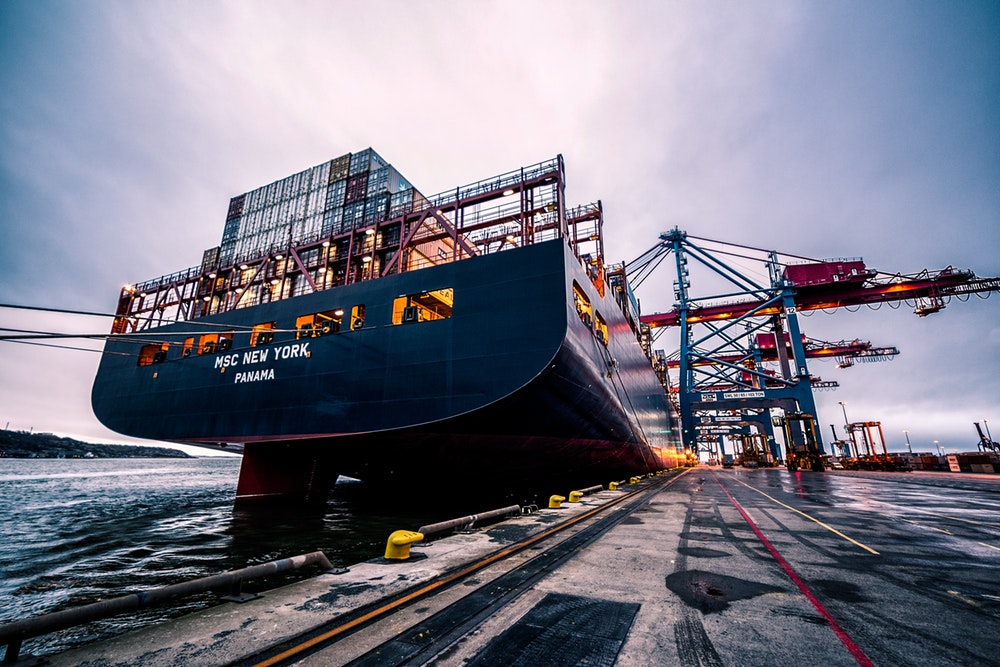
The new record by the Panama-flagged vessel comes barely three weeks after another vessel MSC Maxine hit a record 1450 moves within an eight-hour shift. Equally, the vessel recorded an average of 190 gross moves per hour. The record is inching towards 200 moves per hour which is associated with top global ports. Abu Dhabi’s flagship port – Khalifa – crossed this benchmark in 2015. Gross moves per hour is a maritime productivity term that defines the total container movement on loading, offloading and repositioning divided by the number of hours for which the vessel is at berth. Achieving and maintaining these high levels of productivity is one of the key value drivers for both the shipping lines and Kenya Ports Authority (KPA) in order to maximize efficiencies and increase terminal throughput and capacity.

“We are now targeting to dispatch the big vessels within 48 hours of arrival. That means we are setting a service time of 48 hours.  Once we achieve this target, it will be easier to sustain and manage the fixed berthing windows for all the vessels calling at the Container Terminal”, said Acting Managing Director Dr. Daniel Manduku. Manduku made the remarks in a brief ceremony onboard the container carrier at Port's berth 18 on Monday. KPA Head of Container Operations, Mr Edward Opiyo represented the MD.

Evergreen Line regional agents Gulf Badr Agencies Headquarter Reprensentative, Mr Amr Abdelsalam lauded efficiency being exihibited at the Port of Mombasa. ''The high achievement in breaking records on cargo handling at the Port of Mombasa makes us feel satisfied to do business here,'' Abdelsalam said. He added that they have bigger plans for Mombasa Port in the new year and the future in general. In this voyage the vessel loaded a record 900 full export containers, 1500 empties and discharged 1919 import containers. Apart from the overall performance, two gantry crane operators recorded extraordinary individual feats. Messrs. Francis Mbondo and Isaac Ogolla recorded 445 moves (56 crane moves per hour) and 351 moves (44 crane moves per hour) respectively. The two records also go down as the best stevedoring performances of all time at the port. Stevedoring is the loading and offloading of cargo from ship.

Remarkably, the two operators also hold individual performance records on Ship to Shore Gantry Cranes of 333 moves per hour for Ogolla and 325 moves per hour for Mbondo set in September 2016. The feat earned them a handshake opportunity with His Excellency President Uhuru Kenyatta. MV Ever Diamond made her maiden call at the Port of Mombasa on July 29, 2018. The Evergreen Shipping line vessel has a length overall of 295 m, a breadth of 32m, a deadweight of 55515 tonnes and a gross tonnage of 52090.

African Shipping Line - Kenya operates Ship Agency at the Port of Mombasa, Kenya.

Tuesday

HAPAG LLOYD UNVEILS FUEL SURCHARGE 2019


Hapag-Lloyd unveils new fuel surcharge mechanism for 2019

Hapag-Lloyd on Monday unveiled a new fuel surcharge mechanism designed to help cover the costs of transitioning to low-sulfur fuel, which will be "gradually implemented" as of Jan. 1, 2019.
The "Marine Fuel Recovery" mechanism is a cost formula, taking into account vessel consumption per day, fuel type used and the price of fuel used in each trip while accounting for market fluctuations. The carrier estimates the transition to low-sulfur fuel will cost it $1 billion in additional costs in the first year.


The cost estimates are in line with those provided by CMA CGM, Maersk and MSC, as all carriers prepare to comply with new International Maritime Organization regulations that will take effect in January 2020.

Experts say the cost of transitioning to low-sulfur fuel will be between $24 billion to $60 billion for the entire industry. The largest carriers cited above, meanwhile, are citing between $1 billion and $2 billion hits due to the new rules.

"Given that the industry has only had a cumulative profit of some 8.6 billion USD in the total period from 2012-2017, it is blindingly obvious that the vast majority of this added bill can only be paid by the shippers," Lars Jensen, CEO and partner at Sea Intelligence Consulting, wrote on LinkedIn. "The only interesting question is:

How?"

Hapag-Lloyd's solution appears to be to create a simple adjustment formula, pegged in some way to market fuel prices, trade lanes and the total mass carried by vessels.


The solution is similar to Maersk Line's, which in September said its "new bunker adjustment factor" would follow a more vague formula: Fuel price x Trade factor = BAF. The trade factor is calculated by fuel consumption per container moved on the trade, combined with an "imbalance factor" to adjust for headhaul versus backhaul.

CMA CGM, by contrast, opted for a trade-by-trade fuel surcharge system, "at an average of 160 USD / TEU," without a clear explanation of how the additional surcharge was evaluated.

Given the vast costs to the shipping industry, shippers should expect other carriers to follow suit. Shippers' associations, meanwhile, have made it clear they do not approve of the practice.

"Carriers impose it unilaterally without any negotiation with shippers and ignore a market approach to the global problem," the European Shippers' Council said in September, after Maersk's BAF announcement. "This does not set an ideal cooperation scenario."

"It would have been better if Maersk had discussed its plans with individual customers in the course of confidential contract reviews," James Hookham, secretary general of the Global Shippers Forum (GSF), said in a September statement.

"GSF would encourage Maersk to consult with customers and reconsider their strategy," Hookham said. "These new charges may be all about low-sulphur fuel, but they still stink to us!"

Thursday

NIMASA TO STRENGTHEN AFRICAN SHIPOWNERS LIST

The Nigerian Maritime Administration and Safety Agency (NIMASA) is unhappy that Africa is not on the world’s shipowners’ list.

To NIMASA,it is not good that no carrier from the continent is on the list. As a way out, the agency plans to develop a ship tonnage growth strategy and promote best practices to attract vessels in the nation’s ship registry.

In a message to the Association of African Maritime Administrations (AAMA) Conference at Sharm El Sheikh, Egypt, NIMASA Director-General Dr Dakuku Peterside said African governments and maritime administrators must develop ship tonnage strategy and practices to attract more vessels in African Ship Registry (ASR) to boost their economies. NIMASA, he said, was considering an approach that would address low tonnage and Nigeria’s inability to compete in global maritime trade.

NIMASA’s Director for Special Duties Hajia Lami Tumaka, led Nigeria’s delegation to the conference.
In AAMA Chairman’s report, covering 2017 and 2018, exclusively obtained by The Nation, the Executive Council resolved that Maritime Administrations (MARADS) should:

Consider training and capacity building in Monitoring, Control and Surveillance (MCS) of fisheries activities;
collaborate with relevant institutions to build capacity in Monitoring, Control and Surveillance of fisheries management and fishing activities in African waters; enhance Africa’s Maritime surveillance for the benefit of ship management safety and security;
Strengthen collaboration with Food and Agriculture Organisation (FAQ) on enforcement of Port State Control guidelines on shipping activities; and development of Near Coastal Trading Certification and Competency Code to foster Economic cooperation between Maritime Administrations.

The Executive Council also considered the concept note presented by the Abuja MOU, which stated the International Convention on Standards of Training, Certification and Watch-Keeping for Seafarers (STCW) I978, set minimum standards for training, certification and watch-keeping for seafarers that member states are obliged to meet, or exceed.

African Shipping Line
African Shipping Container Lines Company Limited (“ASLINE”) is the fastest growing and Africa’s leading major container shipping company with its regional headquarters in Dubai and Kenya. Africa Shipping Container Lines Company Ltd is a specialized corporation involved in container liner services and other relative services as well. It is currently ranked as Africa’s new growing container shipping company in terms of operating capacity.

As at 23 Aug 2012, AFRICAN SHIPPING LINE (ASLINE) operates a young modern fleet that comprises of several vessels with a total operating capacity of 3,000 TEUS monthly, spread between China ports of Shanghai, Ningbo, Shenzen, Guangzhou and HongKong connecting to Mombasa(Kenya), Dar Es Salaam(Tanzania), Mogadishu (Somalia), Djibouti and Zanzibar and growing new capacities to Beira (Mozambique) in total covering over and more than ten(10) countries in Eastern Africa.

Africa Shipping Container Lines Company Limited (“ASLINE”) is focused to cover African Shipping Ports connected to international container liner services from China to Japan, Korea, Southeast Asia, Mediterranean, West Africa and the Persian Gulf. We are looking at increasing our fleet to undertake further operations along with other Shipping Lines operating to Africa.

The Executive Council also considered the work undertaken by the secretariat in developing Near Coastal Trading Certification and Competency Code to be adopted to foster economic cooperation among maritime administrations.
The General Assembly is expected to consider other areas of interest designed to address enhancement of maritime pollution prevention and control to ensure protection of marine environment.

The Executive Council noted with concern the role of MARADS in enhancing maritime pollution prevention and control, to ensure protection of maritime infrastructure. It urged maritime administrations to ratify and domesticate relevant IMO instruments on marine pollution, prevention and control which, if fully implemented, would help achieve the drive towards a sustainable use of the African ocean and seas.


Source: The Nation

Wednesday

XCHANGE HAMBURG EASES CONTAINER REPOSITIONING AROUND THE WORLD

International supply chains bank heavily on the maritime network, so much so that about 90% of the freight moves over the oceans in more than 200 million containers every year. However, this also leads to severe inconsistencies within the network, as ‘dead miles’ rack up when ships return with empty containers after their intended cargo delivery. “The shipping industry loses out on nearly $20 billion a year due to empty containers moving around. In that, $5-10 billion is lost over completely avoidable and company-specific imbalances,” said Florian Frese, director of marketing at xChange.


xChange, a maritime startup headquartered in Hamburg, Germany is offering container lines the possibility of reducing their dead miles by helping them supply or use one-way container moves or SOCs from 2500 locations across the world. “More than 200 companies like NVOs, freight forwarders, carriers, and traders use xChange on a daily basis to find partners for their one-ways,” said Frese. “In addition, we offer tracking, do invoice and payment handling for our customers, and also provide insurance and other value-added services, making our platform a one-stop shop.”


The founders of xChange come in with many years of experience working in BCG, consulting for some of the largest container lines in the world. It was during their stint at BCG that they discovered the immensity of the empty container problem, as carriers struggled with reducing dead miles and the costs incurred due to it. There was an environmental aspect to it as well - for instance, a container shipped empty between China, and Europe would end up contributing 1.9 kg of CO2 to the atmosphere.

“The initial solution started out when our founders were at BCG. They created an excel document where they collected information on how much of a surplus a company had, and in which location. They then matched different parties using that information,” said Frese. “The news spread via word of mouth and the excel document quickly exploded as everyone wanted to be a part of it. This was when the founders realized there is a need and a huge value for such a solution.”

Xchange Clients
Today, xChange provides a transparent platform that is automated and highly scalable, unlike the traditional brokerage system that is inefficient and frequently run with vested interests. “We have a vetting program before we let companies join, and containers change hands with a multi-party exchange agreement strengthened by a contractual framework. This makes our system safe for companies to find partners, negotiate deals and in tracking their containers, while also benefiting from low demurrage and detention fees,” said Frese.

Though xChange is now a leader in its niche, it started out with just eight customers and a rather small market footprint. Back then, users complained the product was a bit hard to navigate, as it ended up adding more steps to repositioning - which was already a time consuming and expensive procedure. “We ultimately had to create more interchanges for them and spent the last few months making the process simpler. We realized it was not just about making the solution cost-effective, but also about making the lives of users easier,” said Frese.

“The focus of the product has changed heavily from the time we made the MVP,” said Jan Matysik, the CTO at xChange. “Back then, the core part was the page where we showed the balances for each location and information on where a potential match could happen. Then we had the request page which only had two steps - create and accept - with the process being finished within our software.”


However, matching has become more sophisticated now, as the company considers a lot more parameters in the picture. “We now cover the whole journey of the container, till it gets back to the company that supplied it,” said Matysik. “These companies can see where their containers are in real-time, and can manage the whole voyage via our platform, making it a smooth process.”

The cost-saving measures are on point as well, with data from BCG’s Shipping Benchmarking Initiative showing parties saving $200 per unit for every transaction on xChange - just on harbor costs. The company now has transaction hotspots in the Middle East, SE Asia, Europe, and China. xChange is currently on an expansion spree, rapidly adding on to the location list as it positions itself as a truly global maritime company.

Saturday

KENYA REVIVING IT'S SHIPPING LINE: KNLS

Kenya President Uhuru Kenyatta on Thursday witnessed the signing of a Memorandum of Understanding (MoU) between the Ministry of Transport and Infrastructure and the Mediterranean Shipping Company (MSC) for the revival of the Kenya National Shipping Line (KNSL). The MoU was signed by Transport and Infrastructure Cabinet Secretary James Macharia and Captain Giovanni Cuomo, the First Vice President of Mediterranean Shipping Company (MSC) which is one of the leading global container shipping companies in the world. Mediterranean Shipping Company (MSC) yesterday signed a deal in front of Kenya’s president to revive one of Africa’s most famous shipping lines.

Speaking during the signing ceremony at State House, Nairobi, President Kenyatta said the revival of the shipping line was a priority for Kenya because it would create jobs for thousands of Kenyans.


“We are very keen to revive the shipping line. And we are confident that we can run the shipping line again,” President Kenyatta said.

President Kenyatta welcomed the Government’s partnership with the Mediterranean Shipping Company in the revival efforts, saying he expects the relevant teams to work with dedication and speed so that the shipping line is launched soon.

“This is a valued partnership between Kenya and the private sector. I look forward to launching the shipping line soon,” said The President.

In reviving KNSL through the partnership with MSC, the shipping line is expected to once again become an active participant in international seaborne trade which accounts for a significant percentage of Kenya’s total trade.

The Kenya National Shipping Line was established in 1987 as the national carrier for seaborne trade but years of mismanagement led to its near collapse necessitating the current proactive efforts to restart its operations.

Kenya National Shipping Line has been struggling for many years and has been close to insolvent. The shipping line has been ailing for decades and previous efforts to revive it have failed. Kenya reckons the KNSL is nearing insolvency due to a lack of business.

Kenya Government statement released on Tuesday says, the dormant Kenya National Shipping Line (KNSL) would be revived in a restructuring that will see the exit of three other foreign shareholders.

“The recovery strategy proposed, among other things, is giving the company the sole mandate to handle government cargo,” a statement from the Government earlier this week stated adding “The recovery strategy proposed, among other things, is giving the company the sole mandate to handle government cargo,”

This means it will ship government goods and State tenders offered to private investors such as import of subsidised fertiliser.

The government will seek to allocate a percentage of cargo to be shipped through the line and encourage partnerships with major international maritime companies. This is in addition to government cargo that should as a matter of law be shipped by the KNSL.


Multinational shipping lines have been angling for control of the KNSL as the government looks to revive the struggling parastatal. Sources said the PIL, Maersk and MSC were all eyeing control of the shipping line, encouraged with the guarantee of handling more than millions of shillings worth of business from government annually.

The foreign shareholders in the dormant shipping line include Mediterranean Shipping Company and MS Oceanfreight Ltd.

The revival of the shipping line is expected to return Kenya to its historical place as a rich seafaring nation with highly respected shippers. The shipping line has the potential to contribute over 300 billion shillings ($2.9 billion) to the country’s economy annually together with over 10,000 Jobs.

Monday

DUBAI WORLD BUYS UNIFEEDER GROUP: 660 MILLION EUROS

DP World today announced the signing of the acquisition of 100 percent of the Unifeeder Group for Euros 660 million from Nordic Capital Fund VIII and certain minority shareholders.

Based in Aarhus, Denmark, Unifeeder operates the largest and most densely connected common user container feeder and an important and growing shortsea network in Europe, serving both deep-sea container hubs and the intra-Europe container freight market. The Group reported revenue of Euros 510 million in 2017 and EBIT margins in line with other asset-light logistics operators. The acquisition is subject to regulatory approvals and expected to be earnings accretive in the first full year after completion. It will be financed from existing balance sheet resources and is expected to close in Q4 2018.


Commenting on the announcement, Sultan Ahmed bin Sulayem, Group Chairman and CEO of DP World, said, "We are delighted to add the Unifeeder brand under the DP World umbrella, which supports our strategy to grow in complementary sectors, strengthen our product offering and play a wider role in the global supply chain as a trade enabler."

The acquisition of Unifeeder will further enhance DP World’s presence in the global supply chain and broaden our product offering to our customers - the shipping lines and cargo owners – with a view to ultimately reduce inefficiencies and improve the competitiveness of global trade. The current operations of Unifeeder are complementary to DP World’s existing business and provides future growth opportunities.

"The ever-growing deployment of ultra-large container vessels has made high-quality connectivity from hub terminals crucial for our customers and Unifeeder is a best-in-class logistics provider in this space with a strong reputation in Europe. Our aim is to leverage on the in-house expertise of Unifeeder and to accelerate growth in this scalable platform to deliver value for all stakeholders. Unifeeder operates on the same common-user principle as DP World and adds to the Group’s strong value proposition to international shipping lines and end cargo owners in making the global supply chain more efficient and cost effective," Bin Sulayem added.


Unifeeder, founded in 1977, is an integrated logistics company with the largest and best-connected feeder and growing shortsea network in Northern Europe with connectivity to approximately 100 ports. The company provides efficient and sustainable transport solutions for international container shipping lines between international and regional ports and shortsea services to cargo owners with fully multimodal door-to-door solutions, combining seaborne transportation with road and/or rail. The business is cash generative and operates on a highly flexible cost base.

Jesper Kristensen, CEO of Unifeeder A/S, said, "We are excited to join the DP World Group as we believe that Unifeeder will benefit from the Group’s significant expertise in the wider supply chain and excellent relationships with shipping lines and end cargo owners. Not only is there commonality with our business models but we also share the vision of serving our customers through removing inefficiencies and delivering sustainable shareholder value.

"We have enjoyed great success over the last five years under Nordic Capital’s ownership, and we believe that the Unifeeder brand within the DP World Group has the opportunity to accelerate growth, expand further and take the business to the next level."

MAERSK LINE TO RESTART COLOMBO - MALE ROUTE

Maersk Line to restart operations in Maldives

The world’s largest container shipping company introduced a weekly service between Colombo and Male offering better connectivity through their best-in-class network.


Maersk LineMaersk Line announced that the company has restarted its shipping operations to the Republic of Maldives on the heels of a rapidly growing market and for meeting customer needs.
 
The world’s largest container shipping company introduced a weekly service between Colombo and Male offering better connectivity through their best-in-class network. The initiative also aims to provide a strategic trade opportunity to all the countries in South Asia.
 
“Maldives has a flourishing tourism market and offers an excellent opportunity for global trade. Interestingly, around 90% of Maldives' trade is import-driven and spearheaded by China, India, and Sri Lanka. We believe that the weekly feeder service between Colombo, Sri Lanka and Male, Maldives will facilitate better trade in the region. Besides, we are now equipped with better control and processes to handle these locations and thus will prove to be a reliable, convenient and time-saving service”, said Steve Felder, Maersk Line Managing Director for India, Sri Lanka, Bangladesh, Nepal, Bhutan and Maldives.
 
 Maersk Line is the market leader on the trade lanes from China and India into Sri Lanka. The new service will offer customers access to the best-in-class network and better cargo connectivity with optimal transit time of 18-26 days.
 
“China, India & Sri Lanka being main origins for Maldivian imports, exporters in these markets will benefit the most by having a reliable & trusted -partner in Maersk Line,” he adds.
 
 The global containerised shipping company uses technology like Advanced Remote Container Management (RCM) that can track reefer containers as well as offers superior customer services like dedicated sales and customer service agents for a seamless shipment experience.

Friday

EVERGREEN EXPANSION IN EASTERN AFRICA

In order to meet increasing and diverse market demands, Evergreen Line has announced enhancements to its current Asia – East Africa service (AEF) – adding to its direct calls in Central & Southern China.

Five vessels are currently deployed on the AEF service – three operated by Evergreen Line, the remaining two by COSCO and X-Press Feeders. To accommodate the extended service to China, Evergreen Line and COSCO will each provide one more vessel. As such a total of seven ships with an average capacity of 4,200 TEU will be utilized with a service rotation of seven weeks.
In addition to the current AEF calls in Malaysia, Singapore, Sri Lanka and Kenya, the extended weekly service will provide a direct connection between three Chinese ports and Kenya. The jointly operated service will commence with a sailing from Shanghai on July 5th, 2018 and have the following port rotation:

Shanghai – Ningbo – Shekou – Singapore – Tanjung Pelepas – Port Klang (West Port) – Colombo – Mombasa – Colombo – Port Klang (West Port) – Tanjung Pelepas – Singapore – Shanghai


The economic development of the East African region in recent years has been one of consistent growth. As a major trading partner, Chinese investment plays an important role in this growth and, in particular has lead infrastructure construction, a significant driver of increased import cargoes to the area. The AEF service extension therefore is an appropriate reaction to customer demands within the China – East Africa trade. With the advent of peak season in July, this upgraded AEF service will certainly be a great assistance for shippers on this trade lane.

Source: Evergreen

Thursday

CHINA GIVES $6.3 BILLION IN A LAST MINUTE OOCL BUY OUT

China’s anti-monopoly bureau has given the green light to COSCO’s $6.3bn takeover of OOIL, including its container arm, OOCL. The stock exchange eleventh-hour notification made no reference to the outstanding approval still required by US foreign investment regulators.

A joint statement from COSCO and OOIL advised that, on 29 June, the Anti-Monopoly Bureau of the State Administration for Market Regulation of the PRC had decided “not to prohibit the offer”.


Chinese regulatory approval came just one day before the deadline to fulfil all of the pre-conditions of the deal, set when the takeover was announced on 7 July 2017.  The parties to the deal, which includes a 9.9% minority share for state-owned Shanghai International Port Group (SIPG), said that following the final condition having been met, the ‘composite document’ would be despatched “within seven days” from 29 June after which a further announcement would be made.

Alphaliner noted that under the terms of the deal, COSCO has until Friday to submit the final ‘composite document’ to complete the acquisition.

It added: “The two companies’ announcement failed to mention the status of the review by the Committee on Foreign Investment in the United States (CFIUS) that is focused on ownership of OOCL’s Long Beach Container Terminal.”


The consultant explained: “The US terminal would come under COSCO control and CFIUS approval is still pending due to national security concerns.” In the past year, CFIUS has vetoed a number of deals involving Chinese buyers on the basis of a “threat to national security”.

Indeed, against the backdrop of an escalating trade spat between the US and China, the Trump administration made it known yesterday it intended to block China Mobile’s application to provide telecoms services in the US, again citing national security concerns.


In April, COSCO’s vice-chairman, Huang Xiaowen, said the company was “still answering questions” from CFIUS relating to OOCL assets in the US. The sticking point seemed to be OOCL’s Pier E / Pier F Long Beach Container Terminal which would add to COSCO’s controlling interests at two other facilities at the San Pedro Bay port complex.

Since Mr Xiaowen’s response to investors there has been no official update on the carrier’s negotiations with CFIUS.

Separately, Alphaliner said shares in COSCO Shipping Holdings had plunged by 25% since June amid mounting China-US trade tension, and were further hit last week by ripples from Hapag-Lloyd’s profit warning, which spooked liner shipping investors.

Assuming the COSCO/OOCL deal completes, it will propel the combined entity to third place in the ocean carrier rankings, with a fleet capacity of 2.74m teu, ahead of CMA CGM’s 2.62m teu.

COSCO says it intends to maintain the OOCL brand after the acquisition, but there have been no details and, according to one of The Loadstar’s sources, OOCL staff have not been informed whether their jobs are secure in the new set up.


Wednesday

LIVESTOCK EXPORTS INCREASE FOR HAJJ : SAUDI ARABIA

Saudi Arabia has lifted the ban on Somali livestock imports, official confirmed.

Livestock, Range and Forestry minister Sheikh Nur Mohamed Hassan said the decision followed discussions with the Saudi authorities. Saudi Arabia banned the Somali livestock imports in September 2016 following reports of an outbreak of Rift Valley Fever in the Horn of Africa country.


“Saudi officials realized that the Somali livestock were healthy,” said Mr Hassan adding “The health and quality concerns raised by the Saudis have now been cleared,”


The minister confirmed that export would soon resume.

“Up to 1.1 million goats will be exported to Saudi Arabia prior to this year’s Hajj (the pilgrimage to Mecca about two months from now),” stated Mr Hassan.

Somalia also exports livestock to Egypt, Oman and Yemen. However, Saudi Arabia remains the largest Importer of camels, cattle, goats and sheep from Somalia.

Somalia has previously exported 5,000 herd of cattle to the United Arab Emirates courtesy of the AFRICAN SHIPPING LINE -SOMALIA through Mogadishu and Berbera Ports. The company is a regular exporter of livestock from Somalia to the Gulf countries.

Other Countries that have Livestock Exports include Kenya, Djibouti. Livestock Import countries include Mauritius, Seychelles Turkey.

We can get some livestock for you from Africa especially Kenya, Somalia, Djibouti or Tanzania. Please send an email: africanshippingdubai@gmail.com or call/whatsapp +971 56 953 8569 or +254 726 722 226
  اغنام صـومـالـي  بيع جميع انواع المواشي والأغنام 🐐🐄🐏 جملة & مفرد تصدير إلى جميع دول الخليج العربي للاستفسار اتصل بنا على +971 56 953 8569


Tuesday

CHINA- BELARUS-GERMANY CONTAINER SHIPPING

A delegation of Belarusian Railways led by the company chief Vladimir Morozov will take part in talks with top officials of the Port of Duisburg (Germany) on 19 June, BelTA learned from the press service of Belarusian Railways. “The parties will discuss the proposals of the German company to start freight container shipping along the China-Belarus-Germany (Port of Duisburg) route, as well as promising areas of cooperation with Belarusian Railways taking into account the plans to expand the China-Belarus Industrial Park Great Stone,” the press service informed.

The Belarusian delegation will tour the terminal railway infrastructure of the port and study its technical and technologies capacities to handle container trains. “The relevance of this proposal can also be attributed to the capacities of the Great Stone park. Belarusian Railways is ready to cooperate with the business community of the European Union on mutually beneficial terms,” the press service noted. Belarusian Railways is actively developing container shipping not only through the border checkpoints Brest-Terespol, but also through other Belarusian-Polish border checkpoints: Bruzgi-Kuznica Bialostocka and Svisloch-Siemianowka that handle cargo on the East-West-East route on the 1520mm and 1435mm gauge tracks. Belarusian Railways plans to resume cargo delivery through the border checkpoint Vysoko-Litovsk – Czeremcha by the end of 2018.

The Belarusian rail operator pays particular attention to the transshipment of containers on the Belarusian side. The projected growth of container traffic on the East-West-East route is 540,000 containers in TEU per year by 2020 and 1 million containers in TEU per year by 2025. In January-May 2017 some 104,200 containers in TEU moved along the China-Europe-China route, up by 21.9% as compared to the same period a year before. Plans are in place to transport 415,000 containers in TEU along the China-Europe-China route via Belarus in 2018.
Source: BelTA

Wednesday

CONTAINER LINE CMA PIONEER DIES

Jacques Saadé, who built French shipping company CMA CGM into the world’s third-largest container operator, has died at the age of 81, the company said.

CMA CGM didn’t disclose the cause of death. It comes a year after Mr. Saadé passed the reins of the Marseille-based company to his son Rodolphe, who is chairman and chief executive officer. The company operates around 500 container ships, sailing to 420 ports world-wide.


Mr. Saadé was one of the first industry executives who believed containers would dominate global trade. He launched CMA CGM’s first office in Shanghai in 1992, saying that China would become the “world’s factory.”

These days, container ships move 98% of the world’s manufactured products ranging from designer dresses and home appliances to furniture, heavy machinery and food.

“Jacques Saadé dedicated his life to CMA CGM,” the company said in a statement. “An extraordinary visionary and entrepreneur, he made the group into a world leader in the maritime transport of containers, developing the company in more than 160 countries, while maintaining the family dimension with its values.”

Born in Beirut in 1937, Mr. Saadé fled Lebanon in 1978 to protect his family from civil war and moved to Marseille, where he set up Compagnie Maritime d’Affretement (CMA), with a single ship sailing from France to Lebanon.

He sent his first ships across the Suez Canal in 1983 and CMA was among the first liners to launch a service linking North Europe with Asia in 1986.

Mr. Saadé was an early believer in consolidation. In 1996, he acquired France’s Compagnie Générale Maritime (CGM) to form CMA CGM, which over the years swallowed up a number of rivals, including Singapore’s Neptune Orient Lines for $3.4 billion in 2016.

CMA CGM was badly hurt by the 2009 economic crisis, but stayed afloat after Turkish family-run Yildirim Holding AS invested $600 million for a 24% stake.

The cash injection strengthened CMA CGM’s finances and secured funding to build a series of giant container ships that sail between Asia and Europe and across the Pacific. The ships are part of the Ocean Alliance, which also consists of Chinese behemoth Cosco Shipping Holdings Co., Taiwan’s Evergreen Marine Corp. and Hong Kong’s Orient Overseas International Ltd.

In 2011, he built CMA CGM’s new headquarters in Marseille, a 147-meter (482-foot) glass tower designed by renowned architect Zaha Hadid. It is the city’s tallest building and CMA CGM is also Marseille’s largest employer with around 2,500 workers.

Mr. Saadé graduated with a business degree from the London School of Economics in 1957. On the advice of his father, who ran tobacco, cotton seed and olive oil businesses in Syria, he became an intern in New York to learn about shipping.

He understood the potential of the container used by the U.S. army during the Vietnam War, telling the French business newspaper Les Échos it was “an excellent idea for transporting goods as it was closed, easy and quick.”

“With the death of Jacques Saadé, Marseille has lost one of its most important ambassadors,” city mayor Jean-Claude Gaudin said in a statement.